Common Siding Maintenance Mistakes Exterior Cladding Care Guidelines
Exterior cladding serves as a primary weather-resistive barrier, engineered to shed bulk precipitation, accommodate thermal expansion, and protect underlying structural framing. Across residential and commercial structures, exterior wall performance depends heavily on systematic, material-specific care routines. Common Siding Maintenance Mistakes. Property owners often treat exterior wall care as a purely cosmetic effort focused on superficial dirt removal. Uninformed cleaning techniques, improper sealant applications, and ignored flashing details compromise building envelope integrity rapidly.
Preventing exterior wall degradation requires analyzing moisture transport mechanics, thermal movement coefficients, and material science principles. Applying high-pressure water streams, sealing engineered expansion joints, or painting non-porous substrates creates hidden structural vulnerabilities. Trapped water inside wall cavities accelerates timber rot, degrades insulation efficiency, and fosters toxic indoor mold growth. Correcting improper care practices preserves structural framing, protects asset valuations, and extends cladding operational lifespans significantly.
Maintaining exterior cladding performance requires balancing immediate surface cleaning goals against long-term envelope durability and building code standards. Property managers, maintenance technicians, and building owners must evaluate exterior care routines through a structured diagnostic framework. Understanding how distinct cladding materials—such as vinyl, fiber cement, engineered wood, cedar, and stone veneer—react to environmental exposure prevents costly structural failures. Adopting scientifically sound care routines protects capital investments while preserving primary weather-resistive barriers across all seasonal cycles.
Understanding “Common Siding Maintenance Mistakes”
Systemic Envelope Care Analysis
When building envelope specialists evaluate common siding maintenance mistakes, diagnostic analysis extends far beyond surface appearance. Mitigating exterior degradation requires assessing water drainage dynamics, sub-surface ventilation pathways, and fastener movement allowances. Cleaning routines that focus strictly on removing surface algae can inadvertently drive bulk water behind lap joints. Building scientists calculate moisture accumulation risks, evaluating how aggressive cleaning chemicals or improper sealants degrade primary drainage planes over time.
The Cosmetic Appearance Oversimplification
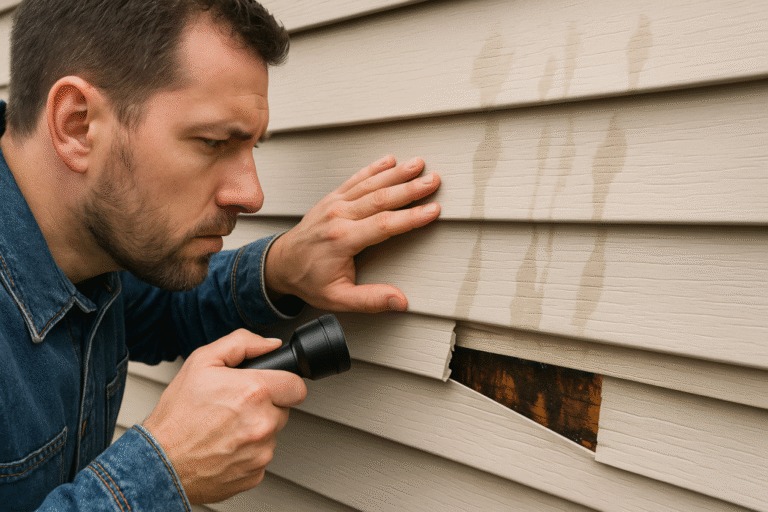
A frequent error in residential property management is assuming that visually clean exterior walls indicate a healthy building envelope. Marketing literature for consumer power washers often promotes high-pressure water streams as universal solutions for exterior care. However, high-pressure water drives moisture through lap seams, saturating structural sheathing and mineral wool insulation. Evaluating exterior wall health without inspecting flashing transitions, weep holes, and sealant flexibility routinely leads to undetected rot inside wall cavities.
Moisture Dynamics and Sealed Drain Path Physics
Inappropriate sealant application represents one of the most destructive care errors committed by property owners. Sealing bottom lap joints, horizontal panel overlaps, or vinyl weep channels traps liquid water within ventilated rainscreen cavities. Trapped moisture cannot evaporate efficiently, forcing water through weather-resistive barriers into interior wall studs. Maintaining open drainage pathways and engineered weep holes guarantees that liquid water drains freely, protecting interior drywall finishes from hidden rot.
Historical Context and Exterior Cladding Evolution
Solid Timber and Paint-Bound Preservation
Early residential construction relied on solid timber boards, cedar shingles, or lime-based stucco applied over heavy timber framing. Traditional maintenance involved applying thick oil-based paints or linseed oil coatings to slow natural wood weathering. These solid timber assemblies permitted significant vapor transfer, allowing trapped moisture to evaporate freely through thick wood boards. While traditional timber required frequent repainting, unsealed wall assemblies dried quickly, preventing localized interior rot.
Mid-Century Synthetic Materials and Sealed Walls
The introduction of aluminum, vinyl, and early composite cladding materials in the mid-twentieth century altered exterior care practices. Manufacturers marketed synthetic cladding as completely maintenance-free, leading building owners to neglect basic drainage and joint inspections. However, early synthetic installations lacked engineered rainscreen gaps and specialized flashing systems to manage wind-driven rain. Moisture entering unventilated wall cavities remained trapped behind synthetic panels, rusting steel fasteners and rotting underlying plywood sheathing unseen.
Modern Ventilated Rainscreen Engineering
Contemporary building codes require integrated water-resistive barriers, continuous exterior insulation, and ventilated rainscreen drainage spaces behind exterior cladding. Modern materials—including fiber cement, high-density composite wood, architectural zinc, and manufactured stone veneers—demand precise, material-specific care routines. Treating modern engineered cladding with legacy maintenance techniques damages protective factory coatings and voids manufacturer warranties. Modern maintenance protocols require systematically inspecting drainage gaps, checking expansion clearances, and maintaining elastomeric joint sealants.
Conceptual Frameworks and Building Envelope Physics
The Rainscreen Pressure-Equalization Framework
Evaluating exterior wall care requires analyzing how ventilated cavity spaces equalize air pressure during heavy windstorms. Modern cladding systems function as sacrificial outer screens that manage bulk water, relying on uninhibited airflow within underlying cavity spaces.
Cavity Ventilation Dynamics
Air enters lower intake vents and escapes through upper outlet channels, creating natural convective air currents behind exterior cladding panels. Uninhibited cavity airflow evaporates residual moisture, keeping underlying structural sheathing and weather-resistive barriers dry throughout the year.
Drainage Channel Clearance
Obstructing lower drainage gaps with exterior caulking, soil accumulation, or garden mulch halts liquid water evacuation completely. Standing water inside drainage cavities saturates wall sheathing, degrading structural integrity and promoting wood-decaying fungus growth.
The Thermal Expansion and Contraction Matrix
Material substrates expand and contract significantly in response to ambient outdoor temperature fluctuations and direct solar exposure. Fastening methods and joint treatments must accommodate continuous dimensional shifts without buckling panels or tearing weather seals.
Fastener Clearance Mechanics
Vinyl and composite cladding boards require loose-fastening mechanics, placing nail heads slightly off panel surfaces inside elongated mounting slots. Driving mounting nails tightly against panels prevents normal thermal sliding, causing panels to warp, buckle, and crack during summer heating.
Perimeter Joint Expansion Gaps
Maintaining specified clearance gaps at vertical corner posts, window casing channels, and material transitions absorbs continuous panel movement. Filling thermal expansion gaps with rigid sealants causes panels to bind against trim boards, forcing boards off structural walls.
Key Cladding Material Categories and Care Trajectories Common Siding Maintenance Mistakes
Vinyl Cladding Systems
Vinyl siding provides excellent moisture resistance, but remains highly sensitive to thermal movement, impact damage, and high-pressure water intrusion. Improper care routines frequently compromise vinyl installations by using harsh solvents, high-pressure washers, or rigid caulking along horizontal overlaps.
Soft-Wash Chemical Application
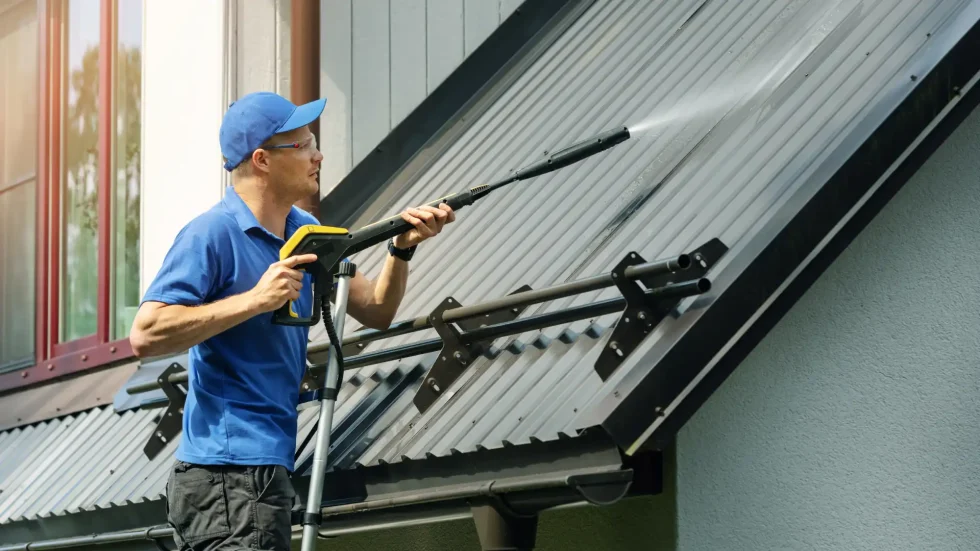
Cleaning vinyl surfaces requires applying low-pressure chemical detergent solutions designed to break down biological growth and surface grime. High-pressure water blasting fractures cold vinyl panels, strips factory color coatings, and forces bulk water past interlocking top edges.
Thermal Clearance Maintenance
Inspecting vinyl walls requires verifying that panels slide freely on concealed mounting nails within engineered perimeter channels. Applying rigid caulk across interlocking panel seams restricts horizontal expansion, causing visible surface waves and board distortion.
Fiber Cement Cladding Assemblies
Fiber cement boards offer exceptional fire resistance and dimensional stability, but absorb liquid moisture readily if cut edges remain unsealed. Improper care includes power-washing cut edges, neglecting sealant joints at trim intersections, or allowing ground soil contact.
Factory Finish and Edge Sealing
Field-cut fiber cement edges require immediate application of specialized 100% acrylic latex sealers prior to final installation. Leaving exposed board edges unsealed allows liquid water to migrate into fiber matrices, causing paint peeling, edge swelling, and board delamination.
Clearance Above Horizontal Surfaces
Fiber cement panels require maintaining a mandatory two-inch clearance gap above roof flashing, horizontal decks, and ground soil lines. Allowing boards to sit directly on horizontal surfaces causes continuous capillary water absorption, leading to bottom-edge crumbling.
| Cladding Material | Primary Hazard | Recommended Washing Method | Clearance Standard |
| Vinyl Siding | High-pressure water intrusion | Low-pressure soft wash ($<500\text{ PSI}$) | $0.25\text{-inch}$ thermal expansion gap at trim |
| Fiber Cement | Capillary moisture absorption | Low-pressure wash with soft brush | $2.0\text{-inch}$ clearance above roof/ground |
| Natural Cedar | UV degradation & wood rot | Low-pressure wood cleaner & stain | $6.0\text{-inch}$ clearance above finished grade |
| Stucco / EIFS | Surface cracking & water trap | Gentle misting with mild detergent | $2.0\text{-inch}$ clearance above hardscape |
Real-World Implementation and Remediation Scenarios Common Siding Maintenance Mistakes
Suburban Residential Fiber Cement Failure
A two-story residential home in Oregon experienced severe paint peeling and bottom-edge crumbling across fiber cement wall panels within five years of construction. The homeowner had repeatedly pressure-washed the exterior walls at high pressure to remove annual green algae growth.
Forensic Inspection and Root Cause
Diagnostic inspection revealed that high-pressure washing forced water into unsealed bottom factory edges and filled horizontal flashing channels. Additionally, garden soil beds had been raised directly against lower panel edges, allowing continuous capillary moisture absorption.
Remediation Protocol Execution
Technicians cut back lower fiber cement boards to establish a mandatory six-inch ground clearance above garden beds. Damaged bottom panels were replaced, cut edges sealed with acrylic sealant, and gentle soft-wash cleaning protocols established for future care.
Commercial Vinyl-Clad Apartment Complex
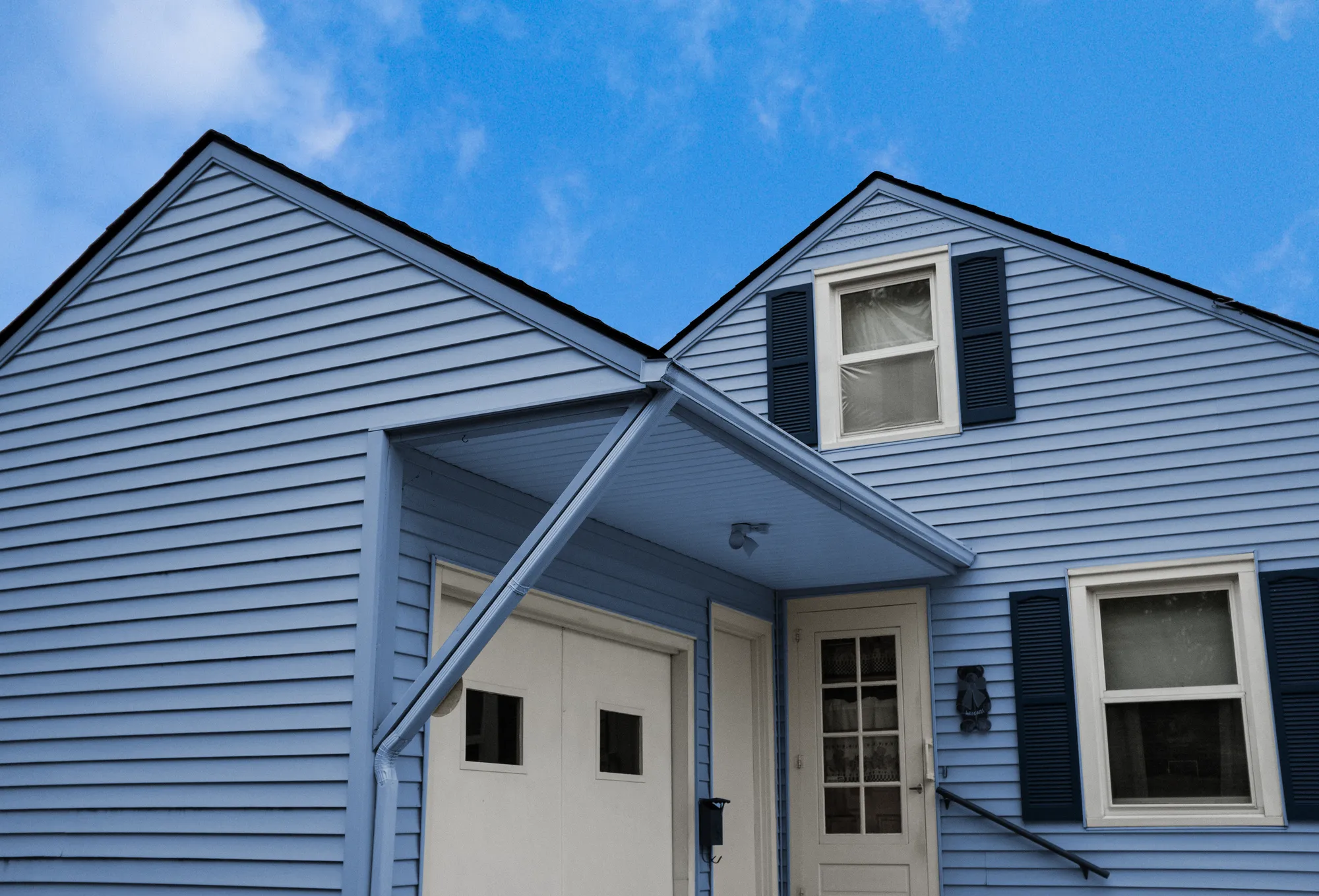
A multi-family residential building in Ohio exhibited severe panel buckling, distorted corner trim, and interior window frame leaks. Local maintenance staff had systematically re-caulked all loose panel overlaps and corner channels to stop perceived wind drafts.
Systemic Care Defect Identification
Maintenance personnel had inadvertently filled engineered thermal expansion gaps and sealed interlocking vinyl weep channels with rigid silicone caulk. Solar heating caused expanding vinyl panels to bind against caulked corner channels, forcing boards to bow outward severely.
Corrective Action and System Restoration
Workers removed all rigid silicone caulk from vinyl channels, replacing damaged panels that had cracked under thermal stress. Loose-fastening mechanics were restored, allowing panels to slide freely while eliminating interior water leaks caused by backed-up weep holes.
Financial Dynamics and Maintenance Resource Allocation
Preventative Care versus Capital Replacement Costs
Allocating annual operational budgets toward low-pressure cleaning, sealant touch-ups, and flashing inspections prevents premature cladding failure. Remediation costs for structural rot, sheathing replacement, and total cladding removal exceed routine maintenance budgets by orders of magnitude.
Professional Care Services versus DIY Execution
Hiring certified envelope technicians ensures proper chemical selection, appropriate water pressures, and correct sealant specifications. DIY maintenance frequently damages delicate factory coatings, drives water into wall cavities, and voids comprehensive manufacturer warranties.
| Care Activity | Annual Cost Share | Primary Expense Drivers | Economic Risk of Neglect |
| Low-Pressure Soft Washing | 15% – 25% | Specialized biodegradable detergents | Surface staining, biological growth |
| Elastomeric Sealant Maintenance | 25% – 35% | High-grade polyurethane sealants | Water intrusion behind trim joints |
| Flashing & Weep Hole Clearing | 10% – 20% | Skilled manual labor inspections | Structural sheathing rot, interior leaks |
| Surface Coating & Painting | 30% – 40% | High-durability exterior paints | Substrate degradation, UV breakdown |
Maintenance Tools, Strategies, and Support Protocols Common Siding Maintenance Mistakes
Low-Pressure Chemical Delivery Systems
Modern soft-washing systems utilize dedicated low-pressure pumps operating below five hundred PSI to apply specialized cleaning detergents. These delivery platforms eliminate physical surface impact, relying on chemical surfactants to kill mold spores and loosen atmospheric dirt gently.
Elastomeric Joint Sealants
Maintaining expansion joints requires using high-performance polyurethane or advanced polymer sealants that retain elasticity across extreme thermal cycles. Standard acrylic caulks harden, shrink, and crack within months, creating open water entry pathways along critical cladding joints.
-
Low-pressure chemical delivery pumps for applying soft-wash cleaning detergents safely
-
Telescoping wash wands equipped with soft-bristle brushes for gentle manual surface agitation
-
High-grade elastomeric polyurethane sealants for sealing vertical trim and window transitions
-
Electronic pin-style wood moisture meters for checking moisture levels inside timber framing
-
Non-destructive ultrasonic thickness gauges for measuring paint coating profiles on metal panels
-
Calibrated plastic putty knives for clearing debris from vinyl weep holes without scratching panels
-
Stainless steel flashing tools for clearing drainage gaps behind stone veneer starter strips
Risk Landscape and Compounding Envelope Failures
Horizontal Overlap Caulking Traps
Applying caulking along horizontal lap joints seals the primary drainage pathway designed to shed moisture that bypasses outer panel faces. Water entering higher wall sections becomes trapped above caulked horizontal seams, soaking sheathing boards and triggering concealed decay.
High-Pressure Power Washing Damage
Utilizing high-pressure spray tips near cladding surfaces strips protective paint coatings, gouges soft cedar fibers, and destroys window perimeter seals. High-pressure streams drive water upward past lap joints, saturating internal wall insulation and causing hidden structural damage.
Vegetation Contact and Soil Encroachment
Allowing shrubs, tree branches, or garden soil to contact exterior cladding creates continuous dampness against wall surfaces. Vegetation blocks natural air movement, traps moisture, and allows climbing vines to insert rootlets into panel joints, accelerating surface breakdown.
Governance, Inspection Protocols, and Adaptation Schedules
Bi-Annual Visual Envelope Audits
Conducting visual envelope inspections every spring and autumn allows property managers to identify minor maintenance needs before structural damage occurs. Inspection checklists must prioritize evaluating sealant elasticity, clearing weep channels, checking clearance gaps, and monitoring coating integrity.
Post-Storm Diagnostic Checks
Heavy windstorms drive precipitation against exterior walls at high pressure, exposing minor flashing defects and sealant failures. Inspecting interior window frames, attic perimeter soffits, and exterior cladding joints after major storms ensures moisture entry is addressed rapidly.
-
Inspect window and door perimeter sealants bi-annually for cracking, shrinking, or adhesion loss.
-
Clear ground soil, garden mulch, and fallen leaf debris away from lower cladding drainage gaps every spring.
-
Verify that vinyl siding panels slide horizontally on concealed mounting nails without binding.
-
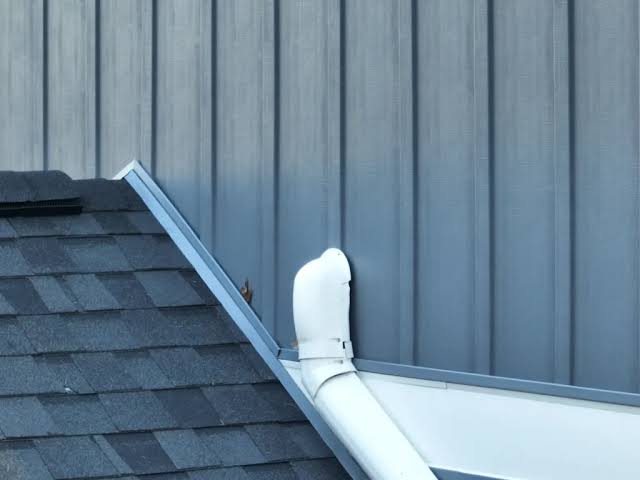
Inspect horizontal roof-to-wall step flashings every autumn to confirm drainage channels remain clear.
-
Check cedar cladding paint and stain coatings annually for chalking, peeling, or timber cracking.
-
Audit lower wall weep channels after heavy rainfall events to confirm liquid water drains freely.
Diagnostic Tracking and Surface Evaluation Metrics Common Siding Maintenance Mistakes
Substrate Moisture Level Measurement
Measuring wood framing moisture content using electronic pin-style meters provides quantitative data regarding internal wall moisture levels. Moisture readings exceeding nineteen percent in timber sheathing indicate active water intrusion requiring immediate exterior flashing repairs.
Coating Adhesion Tape Testing
Evaluating exterior paint adhesion relies on standardized cross-hatch tape testing protocols conducted on representative wall sections. Clean tape releases without paint flaking confirm that existing coatings retain sufficient substrate bonding to justify simple topcoat repainting.
Infrared Thermal Anomaly Scans
Calibrated infrared thermal imaging surveys detect hidden moisture accumulation behind exterior cladding panels non-destructively. Thermal anomalies highlight cold spots caused by wet cavity insulation, guiding targeted wall repairs without requiring invasive panel deconstruction.
Industry Misconceptions and Material Care Myths
The Maintenance-Free Cladding Myth
Marketing synthetic cladding as maintenance-free leads many property owners to neglect basic cleaning and flashing inspections for years. Every exterior material requires routine washing, clear drainage pathways, and maintained perimeter sealants to achieve its expected operational lifespan.
The Bleach Solves All Mold Problems Fallacy
Applying concentrated household bleach solutions to exterior mold growth bleaches surface spores visually without killing underlying root structures. Bleach solutions damage exterior paint finishes, corrode metal fasteners, and harm surrounding garden vegetation if applied improperly.
The Caulk Everything Fallacy
Assuming that sealing every visible gap, seam, and hole with caulking improves weather tightness oversimplifies building physics principles. Modern wall systems require open drainage gaps and weep channels to shed trapped water and permit internal wall ventilation.
Practical, Environmental, and Jobsite Safety Considerations
Environmental Runoff Management
Soft-wash cleaning protocols require collecting or neutralizing chemical detergent runoff before wash water enters storm drainage systems. Utilizing biodegradable surfactants, covering garden beds, and neutralizing chemical solutions protects local waterways and surrounding landscape plantings.
High-Altitude Inspection Safety Protocols
Inspecting upper wall elevations and roof transitions requires utilizing properly secured ladders, scaffolding, or certified aerial lift equipment. Maintenance personnel must follow strict fall protection standards, ensuring personal safety during high-elevation cladding inspections and sealant maintenance.
Conclusion
Preserving building envelope durability requires eliminating common siding maintenance mistakes through scientific material care, continuous drainage management, and structured inspection protocols. Protecting wall performance depends on maintaining open weep channels, selecting low-pressure washing techniques, and accommodating natural thermal movement. Building owners, property managers, and maintenance technicians who prioritize proper envelope care protect structural framing, preserve asset values, and ensure multi-decade cladding performance.